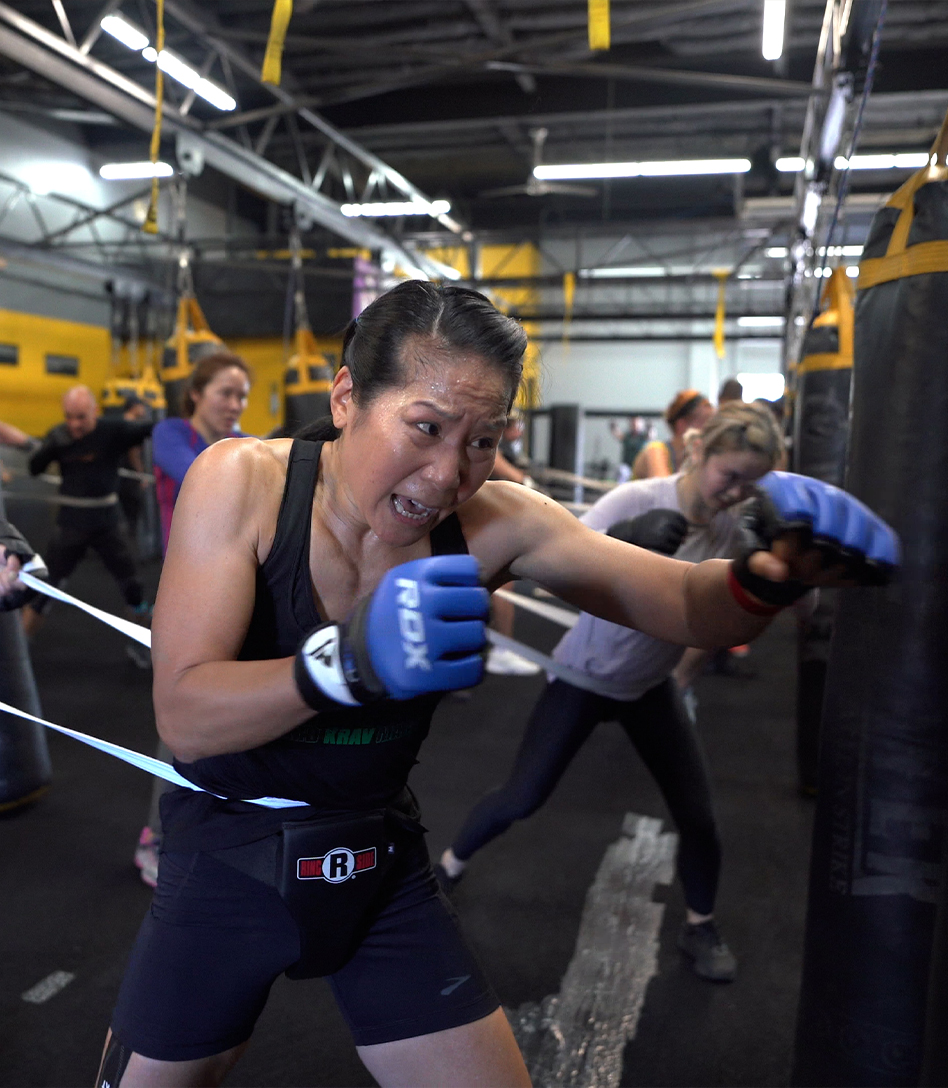
Krav Maga

Krav Maga is the official self-defense system of the Israeli Defense Forces, Israeli Anti-terrorist Units, and various branches of the Israeli Security Forces. Krav Maga has been adopted by and taught to many federal, state, and local law enforcement agencies, including the F.B.I., U.S. Marshal Service, D.E.A., U.S. Secret Service, and the San Diego Police Department. Now the world's most effective fighting system is being offered to civilians.

  • Krav Maga is a simple, effective Reality-Based Self -Defense system that emphasizes instinctive movements, practical techniques, and realistic training scenarios. Its' powerful, easy to learn techniques can empower you, making you more confident, and giving you the tools to protect yourself and your family.


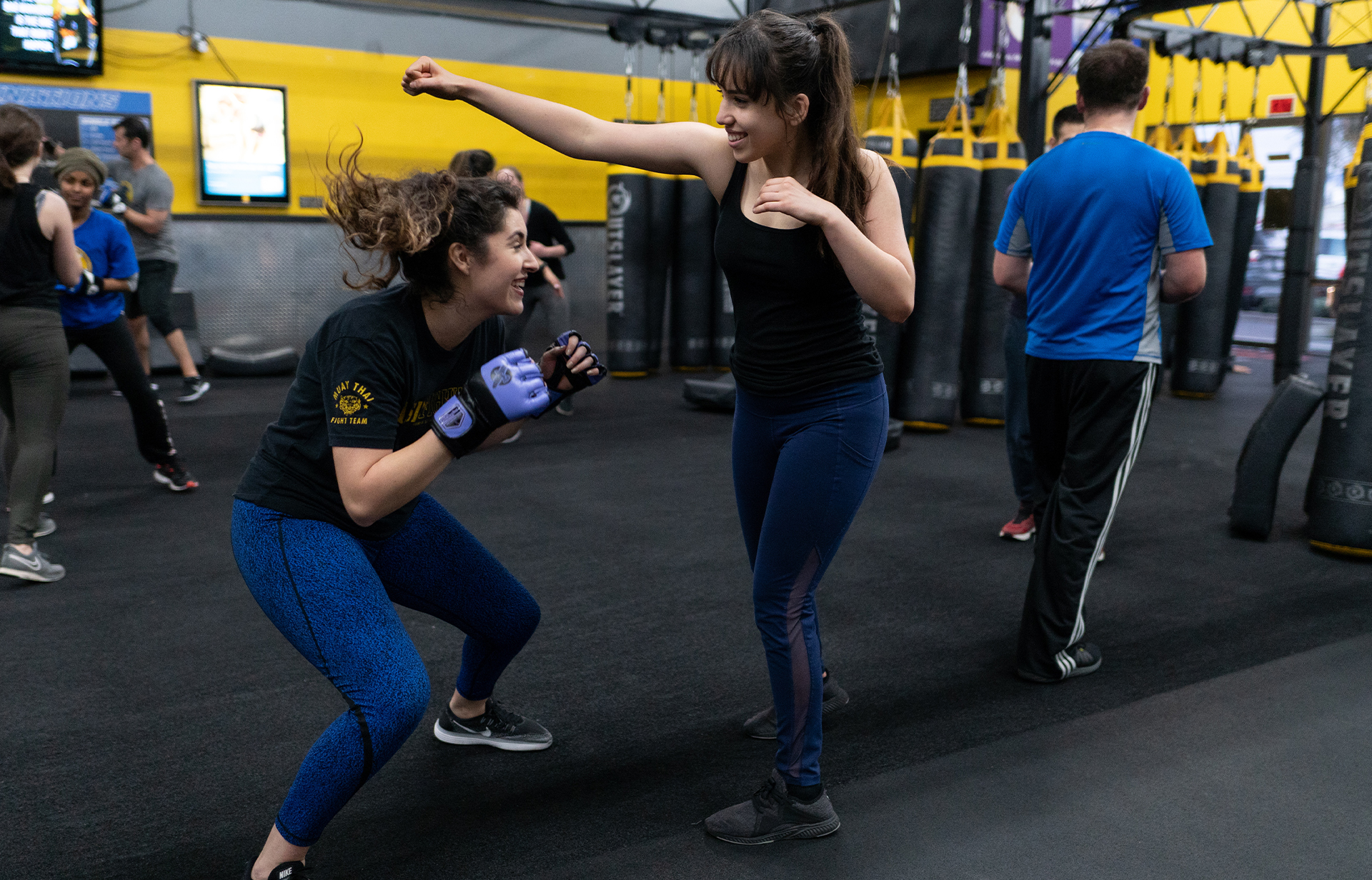
  • These intense classes train you for real-life situations with Real-World techniques that can be quickly learned and mastered by anyone, regardless of age, size or previous training. There's nothing fancy here, just simple and practical punches, kicks and self-defense methods based on your body's instinctive reactions.

Plus, because it's based on a person's natural reactions, it is easy to learn. You can become proficient in months rather than years. Just as important, we teach people to function during the stress and shock of a sudden, violent encounter.

No defense tactics program in the world is more battle tested than Krav Maga. Tested on the battlefield and in the streets, Krav Maga's practical approach to self defense will make you and your family safer and more secure.

People of all ages and levels of physical fitness can start Krav Maga classes and work their way up quickly. Students not only walk away in better shape and effective self defense techniques, they learn how to prepare themselves mentally to tap into their own aggressiveness in any situation.

  • To preserve the integrity of the system, Krav Maga is taught only through licensed Krav Maga Training Centers. In the Santa Clara/San Jose area, the Offical Krav Maga Training Center is The Academy of Self Defense.

Krav Maga is not a traditional martial art, it is a modern method of reality-based self-defense….. Krav Maga is combat for a modern world.

What is Krav Maga?

Krav Maga (pronounced "Krahv Magah" and means "Contact Combat" in Hebrew) is the official self defense and fighting system used by the Israeli Defense Forces (I.D.F.), Israeli Police and Security Services, and numerous U.S. law enforcement agencies.

Krav Maga was developed by the Israeli military for hand-to-hand combat on the battlefield. Imi Lichtenfeld (Chief Instructor for Physical Fitness at the IDF School of Combat Fitness—the founder of Krav Maga) was chosen to develop the system. To achieve his goal, Imi studied the fighting systems developed by cultures all over the world. He selected the best of their ideas, and culled out the techniques that were showy or required exceptional skill or physical prowess. He took the best of what was left, and refined them into a fighting system. His search was driven by answering these questions:

  • Is it easy to learn? YES
    The IDF wanted to train their soldiers quickly. They wanted them to remember what they learned when they were under pressure.
  • Can it be used by people of all sizes and physical conditions? YES
    Men AND Women of all sizes and of a wide age range serve in the Israeli military. The IDF wanted to train their soldiers quickly. They wanted them to remember what they learned when they were under pressure.
  • Is it effective? YES
    (The key question. This was for warfare—not recreation or enlightenment.)

The end result became Krav Maga--a Reality- Based Self-Defense system that is all about employing the quickest and most effective counter-response when attacked.

Since 1964, Krav Maga has been taught to civilians and law enforcement all over the world as well. This unique training method has been recognized as the most efficient self-defense system for real-life situations, emphasizing practical defenses against real attacks. It has been taught to hundreds of U.S. law enforcement agencies and thousands of civilians.

Krav Maga was developed in a hostile environment in which the combatants could not devote many hours to hand to hand combat training. Therefore, the Krav Maga system was created to bring students to a high level of proficiency in a relatively short period of time. There are no forms (katas) or rules or set combinations as reactions to attacks. Instead, Krav Maga training focuses on teaching simple self-defense techniques which are specifically designed to meet real world attack situations.

Krav Maga is a survival system dealing with personal safety issues. It is considered to be a modern, highly refined, street fighting system, designed to be effective against armed and unarmed attackers. Krav Maga addresses a wide variety of aggressive attacks that include punches, kicks, chokes, bear hugs, headlocks, grabs, as well as defenses against multiple attackers and assailants armed with a firearm, edged weapon, or blunt object.

Krav Maga training stresses the ability to react when surprised. Techniques and training methods emphasize the ability to function from a poor state of readiness, and to move from a passive to aggressive state immediately in order to fight back and survive. Training methods teach students to react effectively under stress and to move efficiently from a position of disadvantage to a position of advantage.

In addition to self-defense, Krav Maga teaches hand-to-hand combat. This is a more advanced and sophisticated phase, and shows how to neutralize an opponent quickly and effectively. It embodies elements related to the actual performance of the fight including tactics, feints, powerful combinations of different attacks, the psychological dimensions of the fight, and learning how to use the environment to your advantage.

Krav Maga includes specialized training methods to not only challenge students physically, but to also instill a special mental discipline meant to strengthen the spirit and to develop the ability to deal with violent confrontations under intense stress.

Krav Maga incorporates fitness, self-defense and fighting like no other system. Krav Maga's top-rated Fitness classes compliment training by toning muscle and dramatically improving strength and stamina. Krav Maga's self-defense classes are a total-body workout that combines kicking, punching, street fighting, ground fighting, and defenses against weapons, getting students into prime physical shape. The total-body workout benefits of the Krav Maga self-defense and fitness system have been featured in publications such as Shape, Men's Fitness, USA Today, US, and SELF, as well as television from CNN and Extra to The Today Show.

History of Krav Maga

Krav Maga was developed by Czechoslovakian-born Imi Lichtenfeld, the son of a renowned police officer in Bratislava. Imi was a champion heavyweight boxer, an expert in Ju-Jitsu and Judo as well as a trapeze acrobat. Imi's family was forced to emigrate, eventually landing in what was then Palestine and is now known as Israel.

Soon after the Israeli state was established in 1948, Imi was asked to develop a system of fighting and self-defense for the Israeli Defense Force (IDF). Imi carefully refined Krav Maga during his career as chief instructor of hand to hand combat for the IDF. Beginning with Special Forces units like the Haganah, Palmack, and Palyam, Krav Maga became the official combatives training for all military personnel, Israeli police and security forces. Faced with the task of preparing both fit and out-of-shape soldiers, Imi developed a comprehensive system that relied on simple, instinctive moves rather than rigid techniques requiring years of training.

In 1964, Imi retired from the IDF and began teaching Krav Maga to civilians, law enforcement, and military applications. In 1978, Imi and several of his students created the Krav Maga Association, which was aimed at promoting the teaching of Krav Maga in Israel and throughout the world.

In 1981, the Krav Maga Association of Israel and the Israeli Ministry of Education held the first International Instructor's Course at Wingate Institute for Physical Education. A delegation of 23 members from various cities in the U.S. attended the course, which was supervised by Imi himself. Californian Darren Levine was selected to be part of the delegation because of his martial arts and boxing background, as well as his involvement in the physical education program at the Heschel Day School near L.A. During the course, Imi befriended Levine and told him that he would come to the U.S. to teach and train him.

Darren Levine went on to offer Krav Maga classes at the Heschel Day School. At Imi's request, Levine and one of his students, Joel Bernstein, along with other prominent members of the Jewish community in L.A., formed the Krav Maga Association of America, Inc. In 1987, Levine and his top students began teaching Krav Maga to law enforcement in the U.S. Under Imi's guidance, they adapted Krav Maga to suit the needs of U.S. law enforcement and military personnel.

Shortly after Levine received his 6th degree black belt in Krav Maga, Imi awarded him a Founder's Diploma for Special Excellence in Krav Maga. Imi has awarded this diploma only twice.

These diplomas were given to the people that Imi wanted to be the leaders of Krav Maga.

Krav Maga Worldwide Enterprises was formed in January of 1999 to expand and promote Krav Maga in the U.S. and around the world. Krav Maga is rapidly gaining in popularity and almost 10,000 people are currently studying the art. It is widely used by members of the U.S.'s local, state and federal police agencies, including the FBI, Secret Service and the Bureau of Alcohol, Tobacco & Firearms.

Lake").

Testimonials

Unlike most martial arts, Krav Maga is extremely effective for the street. Krav Maga is the real thing."
Bas Rutten, UFC Heavyweight Champion

"The women I know who have taken Krav Maga really enjoyed the sense of control they felt in learning how to defend themselves. The whole Krav Maga experience is a very positive one: physically, mentally and emotionally.
Rosemary Lichtman, PhD, Psychologist

"Krav Maga has real life applications. There's no wasted movement. There's no learning stuff for the sake of learning it. Everything you spend time with you can use to defend against a violent street attack."
Jim Bianchi, Attorney At Law

"I have never seen a [self-defense] system that is so simple yet extremely effective. The training has raised my awareness and made me more confidant as a police officer."
Deputy E. Ramos, LA Co. Sheriff's Department Force Training Division

"Krav Maga is the best defensive tactics system to come to Law Enforcement in the last 20 years. It's simple, it's effective, it's practical, and it works. It has proven to work!"
Detective Brian Arnspiger, Burbank Police Department Supervisor, Training Division

Krav Maga for Law Enforcement

Krav Maga Worldwide is dedicated to improving defensive tactics training for law enforcement and military personnel. As the official defensive tactics system of the Israeli Defense Forces, the Israeli National and Military Police, and Israeli Special Operations and Security units, Krav Maga has been tested in every law enforcement and military environment – from front lines to back streets, from prisoner transport to "take no prisoners".

Because Law Enforcement and Military units establish differing use of force policies, the Krav Maga Force Training Division has established two branches of training.

The Krav Maga Force Training Division (KMFTD) has taken important steps to refine Krav Maga for the needs of American law enforcement. Keenly aware of use-of-force issues facing law enforcement, KMFTD gathered top authorities in the use-of-force field, including:

  • deputy district attorneys
  • police liability defense lawyers
  • police administrators
  • top defensive tactics instructors.

In particular, the U.S. Chief Instructor, Darren Levine, is a Deputy District Attorney for Los Angeles County. He lectures frequently on use-of-force issues. This team established a defensive tactics system that protects law enforcement officers from harm and law enforcement agencies from liability.

The Krav Maga law enforcement-training curriculum has been divided into ten basic areas:

  • Combatives
  • Self Defense
  • Weapon Retention
  • Defensive Tactics Against Threats Involving Handgun
  • Defensive Tactics Against Attacks With A Blunt Object (Stick)
  • Defensive Tactics Against Attacks With An Edged Weapon (Knife)
  • Defensive Tactics Against Threats With A Shotgun/Rifle/SMG
    Utilizing Impact Weapons for Defensive Purposes and Striking Techniques
  • Arrest & Control / Officer Safety Tactics
  • Ground Fighting (Law Enforcement Applications)

…as well as advanced training areas, including Special Operations

Krav Levels

Belts or levels are not emphasized in the system.  However, the real test is knowing the Krav Maga techniques well enough to perform them successfully on the street - when needed. In the classroom, there are 5 levels defined to help the instructors better organize the various techniques and to effectively teach them to all students. Here at The Academy of Self Defense we are certified to teach all 5 Levels

Krav Maga Level 1: This level is designed for all new Krav Maga students and will cover Yellow Belt techniques. The goal of this level is to teach the basics of self-defense and fighting, including fighting stance and movement, various punches, kicks, elbows, and knees. The student will also learn techniques from both a standing position, as well as, from on the ground and be able to defend against chokes, headlocks and wrist grabs.

Krav Maga Level 2: In this intermediate level, students will learn new Orange Belt techniques, in addition to reviewing and improving their Krav Maga Level 1 skills. More advanced techniques such as defenses with simultaneous counterattacks, bear hugs, and ground threats will also be learned.

Krav Maga Level 3: In this intermediate level, students will learn Green Belt techniques that reinforce and enhance techniques learned in the previous levels. Additional training focus is given to develop proficient defenses against some of the more common attacks such as punch and kick combinations, hair grabs, and more threats from the ground or from behind.

Krav Maga Level 4: This level is for students interested in more advanced training, emphasizing Blue Belt techniques. The curriculum includes additional punches and kicks, more defenses against aggressive attacks, and defenses against common weapons.

Weapons Defense: Focused training to develop effective tactical defenses against aggressive sticks, knife, and gun attacks. (Open to KM 2 students and above.)

Krav Maga Frequently Asked Questions

  1. How is Krav Maga Different from other Martial Arts?
  2. Who is using Krav Maga?
  3. What are the benefits for me?
  4. What if I have/have not taken martial arts before?
  5. How long will it take for me to become proficient in Krav Maga?
  6. How safe is Krav Maga? Do I risk getting hurt?
  7. Can my kids take Krav Maga?
  8. I'm tired of being overweight. Will I lose weight taking Krav Maga?
  9. What should I wear? Do I have to buy special equipment or clothes?
  10. Is there a Tournament Competition and a Belt system for Krav Maga like Karate?
  11. Am I limited in the number of classes I can attend each week?
  12. Do you sell training clothes and gear?
  13. How long are the classes?
  14. Do you teach ground fighting?
  15. How do I get started?
  16. What is behind the sudden popularity of Krav Maga?
  17. What if I am not sure about joining a class?
  18. I want to spar. Is that available?
  19. I don't want to spar. Will I be forced to?
  20. I am a small person with little strength. How can Krav Maga help me?
  21. My spouse and I both want to take Krav Maga. Can we take classes as a couple?
  1. How is Krav Maga Different from other Martial Arts?

    Krav Maga is not a traditional martial art. No katas. No rituals. No nonsense. Based on simple principles and instinctive movements, this reality-based system is designed to teach real self-defense in the shortest possible time. You'll learn to defend against common chokes and grabs from all angles, punches and kicks, and weapons such as guns, knives, and sticks. Just as important, Krav Maga will teach you to function under stress, shock and adrenaline rush of a sudden, violent encounter. Tested on the battlefield and in today's streets, Krav Maga's practical approach to self-defense will make you safer and more secure. And believe it or not, you'll have so much fun working out, you won't be able to wait for your next class!
  2. Who is using Krav Maga?

    Krav Maga has recently been taught to U.S. federal, state, and local law enforcement agencies, including, but not limited to the following:

    Alabama State Police
    Beverly Hills Police Department
    Burbank Police Department
    Bureau of Alcohol, Tobacco & Firearms
    California Highway Patrol
    Drug Enforcement Administration Arrest & Control Unit
    El Segundo Police Department
    Federal Bureau of Investigations
    Florida State Highway Patrol
    Illinois State Police
    Los Angeles County Sheriff's Department
    Los Angeles Police Department Academy
    NYPD
    Ohio State Police
    Pennsylvania State Police
    Santa Monica Police Department
    Texas Department of Public Safety
    U.S. Coast Guard - Port Security Unit
    U.S. Coast Guard Tactical Law Enforcement
    U.S. Department of State
    U.S. Immigration Service
    U.S. Treasury Department

  3. What are the benefits for me?

    a. Awareness

    Students of Krav Maga use basic moves in various combinations to fend off violent attacks. This means that students adjust to new situations through improvisation, an important and unique feature of this style. This requires using the head as well as the body, and thus Krav Maga addresses the thought process as well as the physical action.

    b. Confidence

    Improvisation also allows for limitations in physical abilities. Not everyone can bring his or her leg up to a 180 degree angle, and thus the system is geared towards the average person. Students are taught a variety of possible defensive reactions for each possible attack situation, building upon an actual framework of useable techniques. They are then encouraged to utilize the responses that are appropriate to their capabilities. This allows the student to develop a sense of confidence in their abilities.

    c. Physical Fitness

    Because physical fitness is closely interwoven into the system, the workout includes a number of cardiovascular and strength building exercises, as well as stretching to increase flexibility. Emphasis is put on speed, endurance, strength, accuracy and coordination, especially for intensive Krav Maga training.

    Krav Maga is a style benefiting both the individual who seeks serious Self-Defense training as well as the practitioner seeking to round out prior martial art knowledge. It is a style that proves most effective against any type of assault.

  4. What if I have/have not taken martial arts before?

    For many people, Krav Maga is their first experience in martial arts. However, we also have many students who come to train with us and have numerous years of experience in other systems. In fact, most Krav Maga instructors have years of training in a variety of systems. Therefore, Krav Maga has proven to be a very open system and welcomes all who wish to participate, regardless of background.
  5. How long will it take for me to become proficient in Krav Maga?

    Krav Maga, unlike many other martial arts, is a very fast-progressing system. Part of its design was driven by the need to train people very quickly and very efficiently. Consequently, it typically takes a person of average physical ability perhaps only several months before significant progress is achieved and noticeable.
  6. How safe is Krav Maga? Do I risk getting hurt?

    Krav Maga is as safe as any other martial arts form. During your instruction you are required to wear shin and groin protection. Krav Maga classes are typically small and tightly controlled. The chances of being injured during a class are as remote and even less than for any other sport. The chances of someone attacking you being injured, however, are extremely high.
  7. Can my kids take Krav Maga?

    Children ages 7-11 love our  kids' program. While the key for them is FUN, we want parents to see that they're receiving invaluable lessons to help them learn, get along with others and achieve success for the rest of their lives.

    We teach the same character building lessons one should expect from a good traditional martial arts school: respect, self-control, discipline, confidence, concentration and focus. However, we don't fool around when it comes to self defense. While we give them the tools and tricks to deal with annoying bullies, we also give them the knowledge and awareness skills to save themselves from much more serious problems like abduction. We take care not to frighten them while educating about the dangers of the world, and we don't break their spirit with overly militaristic teaching.  Sensitivity to the personality of each child is required to motivate them to become  their best. We make sure they understand when it is appropriate to use their techniques, emphasizing peaceful resolutions to conflict.

    More than ever, children need to have opportunities to be active; our unique cross-training not only holds their interest, but also increases their strength, endurance and flexibility. They'll learn to defend against common grabs, holds, and strikes, and they'll have fun doing it!

    Beyond the self defense and physical fitness components, parents notice a positive shift in their child's attitude.  Our training program improves your child's overall motor skills such as agility, coordination and balance. As these skills improve, so do your child's confidence, focus and self esteem. Our self defense training won't make your children more prone to violence - it'll give them the confidence to avoid aggression in themselves and others.

  8. I'm tired of being overweight. Will I lose weight taking Krav Maga?

    No question about it! Losing weight is definitely a side-benefit of Krav Maga. Classes always include warm-up and workout. However, it's more accurate to say you will lose fat. If you're not overweight by much, your weight reading on the scale may not change significantly. That's because with Krav Maga, you'll be losing body fat and gaining lean muscle, which weighs more than fat. You'll notice the difference in the way your clothes fit and your new, more shapely, toned appearance.
  9. What should I wear? Do I have to buy special equipment or clothes?

    Unlike other martial art forms, there is no imposed uniform for Krav Maga. Sweats and a comfortable t-shirt are typically sufficient. For boxing, gloves and wrist wraps are required. We do require that you bring body protection (groin protection for men) to each class.
  10. Is there a Tournament Competition and a Belt system for Krav Maga like Karate?

    Krav Maga does have a color belt system of advancement in expertise. However, there are no specific competition events for Krav Maga like there is for other martial arts. Similarly, there are no katas in Krav Maga. Each belt level carries with it various techniques that must be performed in a testing environment. One may or may not desire to even test for a belt. There are no such obligations in Krav Maga.
  11. Am I limited in the number of classes I can attend each week?

    No, members can train as often as they wish.
  12. Do you sell training clothes and gear?

    A complete proshop stocked with Krav Maga wear and gear is available and contains everything you need to train and look good when you are not training.
  13. How long are the classes?

    The classes are 1 hour long.
  14. Do you teach ground fighting?

    Yes, we understand the need to defend ourselves in the event we go to the ground. However, we always look to get up as soon as possible.
  15. How do I get started?

    Drop by our facilities during any normal class times and there will be someone there to speak with you. We are located at:
    3475 Woodward Avenue in Santa Clara California.

    If you can't stop by, give us a call at (408) 844-8485 or send us an email at info@academyselfdefense.com

  16. What is behind the sudden popularity of Krav Maga?

    Even though Krav Maga has been around for approximately forty years, other forms of martial arts such as Karate or Tae Kwon Do have been more popular in the United States. Krav Maga is only now beginning to reach mass popularity in the US. Once reserved for special military, police and protection units, it is now accessible to just about any individual of any ability. This is because Krav Maga was designed for the general public as well. Krav Maga has also been more in the public eye due to media exposure, from movies like Enough, Terminator 3, Tomb Raider 2, and Daredevil with celebrities like Jennifer Lopez, Shannon Elizabeth, Angelina Jolie and Jennifer Garner training. Now more than ever, people want to feel safe and Krav Maga is one of the most efficient ways to protect yourself and your loved ones.
  17. What if I am not sure about joining a class?

    You are always welcome and encouraged to sit-in on a class to determine for yourself if Krav Maga is right for you. There is no obligation whatsoever. Email or call us to set up a convenient time for you to explore Krav Maga.
  18. I want to spar. Is that available?

    Absolutely. The Krav Maga Fight Class includes sparring (with gloves and full head protection) and grappling. It is an optional class where you'll get to test your combative skills with a partner who's trying to do the same. While this class may leave you a bit more winded with a few more bumps and bruises, the maintenance of student safety is always emphasized. This class requires at least 2 months of regular Krav Maga training and the permission of the instructor to participate.
  19. I don't want to spar. Will I be forced to?

    No. Sparring is conducted in the special optional Fight Class described above.  In Krav Maga it is not necessary to be good at sparring to learn to defend yourself. Remember, in self defense there are no rules. In sparring, some rules must be imposed to maintain student safety. While sparring may help you become a more proficient, coordinated fighter, it is not required.
  20. I am a small person with little strength. How can Krav Maga help me?

    Krav Maga was designed to benefit the average person. The system is not about sheer strength or power. As a matter of fact one of the basic tenets of Krav Maga is that one should not oppose power with power. Rather, Krav Maga blends a combination of physical skill with mental self-defense determination. Consequently, Krav Maga is more accessible to more people of either sex, shape or size than many other martial art forms.
  21. My spouse and I both want to take Krav Maga. Can we take classes as a couple?

    Why not? What better way to ensure that your better half is as prepared to face an attacker as you are? As an added bonus you are guaranteed a workout and training partner in your house as well.